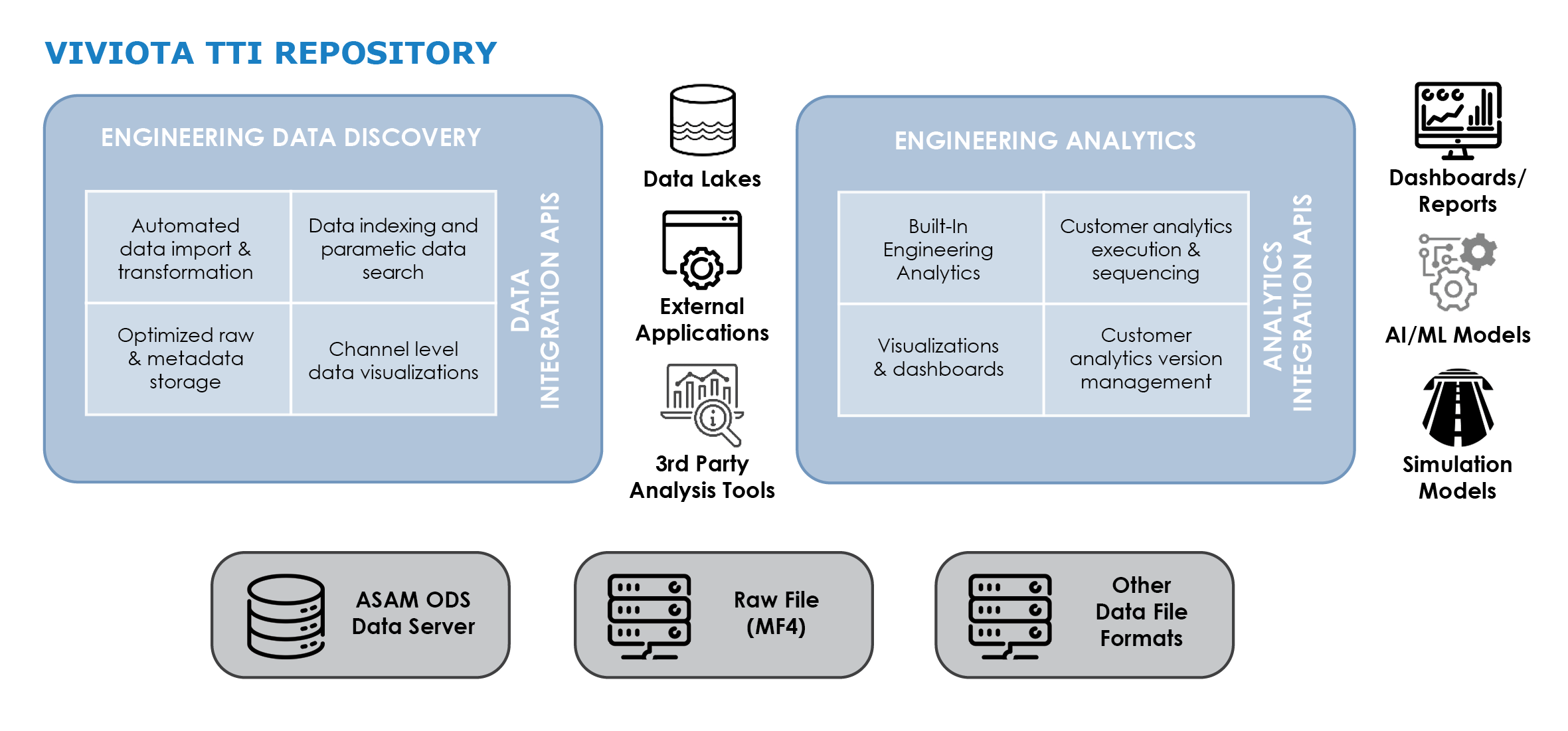
It's a natural fit. Signal.X brings 20+ years of NVH and end-of-line test expertise — defining defect-revealing test targets, controlling test stands with precision, and archiving raw and processed data. Viviota provides the engineering data platform that scales it across the enterprise — ingesting and unifying sensor data, making it searchable, and powering a fast analysis workbench for your engineering teams.
Together, the integrated solution helps manufacturers: • Dramatically reduce time-to-insight • Cut test costs and eliminate redundant testing • Pinpoint root causes of failures and performance drift • Operationalize AI/ML for predictive quality and reliability
If you'll be at NI Connect, two ways to connect:
1) Catch Barry Hutts Tech Stage talk "From Chaos to Clarity: Turning Test & Measurement Data into AI-Ready Pipelines" Thursday, May 14 | 8:20–8:40 AM
2) Stop by our shared Viviota + Signal.X booth We'll walk you through the integrated solution live, with real test data.
Not attending but curious? Send an email to Pete.Zogas@viviota.cpm
Engineering teams possess an underutilized goldmine in today’s fast-paced industrial landscape: their data. From sensor readings and vibration logs to video, sound, and test metadata, engineering data holds critical insights that can accelerate innovation, reduce costs, and safeguard operations against failure. Yet, a significant portion of engineering time is wasted merely searching for, organizing and wrangling data to make it usable.
Accelerating AI & ML Analysis with TTI’s Data Cleansing Technology
4:37
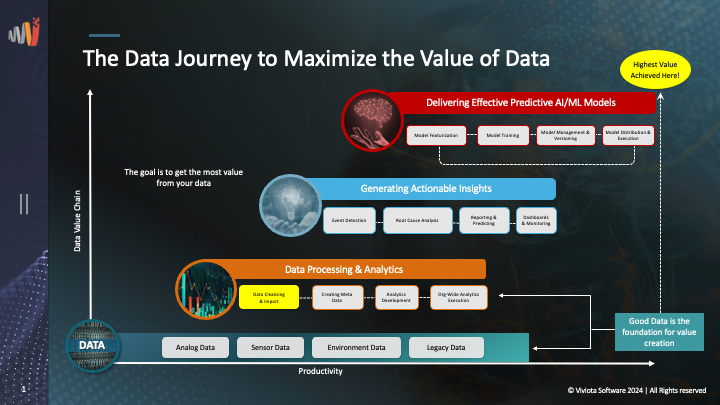
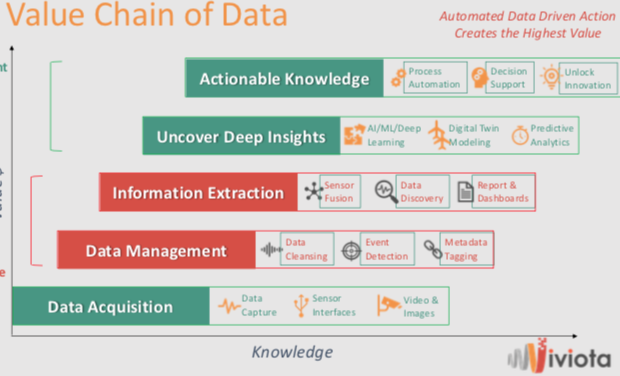
The importance of data preparation has grown exponentially with the rise of AI. Data comes in many forms and formats, including homegrown applications, SQL databases, files, sensors, video, and physics-driven analog data. Traditionally, data cleansing is defined as detecting and correcting (or removing) corrupt or inaccurate records from a dataset, table, or database. The data challenge presented is identifying the data's incomplete, incorrect, inaccurate, or irrelevant parts and then replacing, modifying, or deleting the dirty or coarse data.
Since our company's inception, we have had the privilege of engaging with a diverse range of customers, all grappling with a common challenge-the management of their data. Whether a small business or a large enterprise, the issue of technical debt, a result of short-term thinking about data, is a consistent theme. Technical debt, in this context, refers to the cost that accumulates when short-term solutions are implemented to address immediate needs, leading to a complex, inefficient, and duplicate data infrastructure over time.
This technical debt spawns from a patchwork of applying technologies one by one, reacting to a current need. A prime example is when companies opt for a do-it-yourself plan because they don't have to engage procurement or IT and currently have resources available. Aside from the expanding technical debt, this strategy ignores the ongoing service support issues that cost 10x what an off-the-shelf product when looking at the total cost of ownership. I have observed extreme examples of this behavior at companies that have been around for many years. The decision to patch things and solve a short-term pain is very tempting. Leaders convince themselves they can do it cheaper and better because it is custom-built for them versus the pain of trying to convince stakeholders to procure a product.
It's clear that addressing and reducing technical debt is not a simple task. It requires a structured methodology for identifying, justifying, and funding new projects. This funding is not just about acquiring technology; it's about generating the emotional momentum needed to overcome the inertia that has built up over many years in replacing outdated technology.
Harvard Business Review[i] reported that cross-industry studies show, on average, less than half of an organization's structured data is actively used in making decisions—and less than 1% of its unstructured data is analyzed or even used at all.
Traditionally, the data cleansing is defined as the process of detecting and correcting (or removing) corrupt or inaccurate records from a record set, table, or database and refers to identifying incomplete, incorrect, inaccurate or irrelevant parts of the data and then replacing, modifying, or deleting the dirty or coarse data.